3D Acquisition

After a sensor system has been set up and is running, it is ready to start capturing 3D data.

Laser profile sensors project a laser line onto the target.
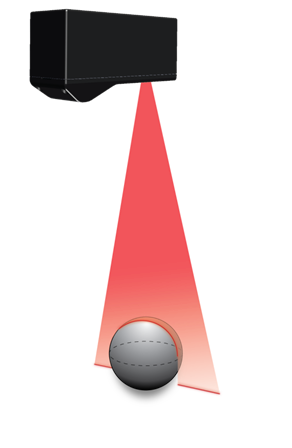
The sensor's camera views the laser line on the target from an angle and captures the reflection of the laser light off the target. The camera captures a single 3D profile—a slice, in a sense—for each camera exposure. The reflected laser light falls on the camera at different positions, depending on the distance of the target from the sensor. The sensor’s laser emitter, its camera, and the target form a triangle. The sensor uses the known distance between the laser emitter and the camera, and two known angles—one of which depends on the position of the laser light on the camera—to calculate the distance from the sensor to the target. This translates to the height of the target. This method of calculating distance is called laser triangulation.
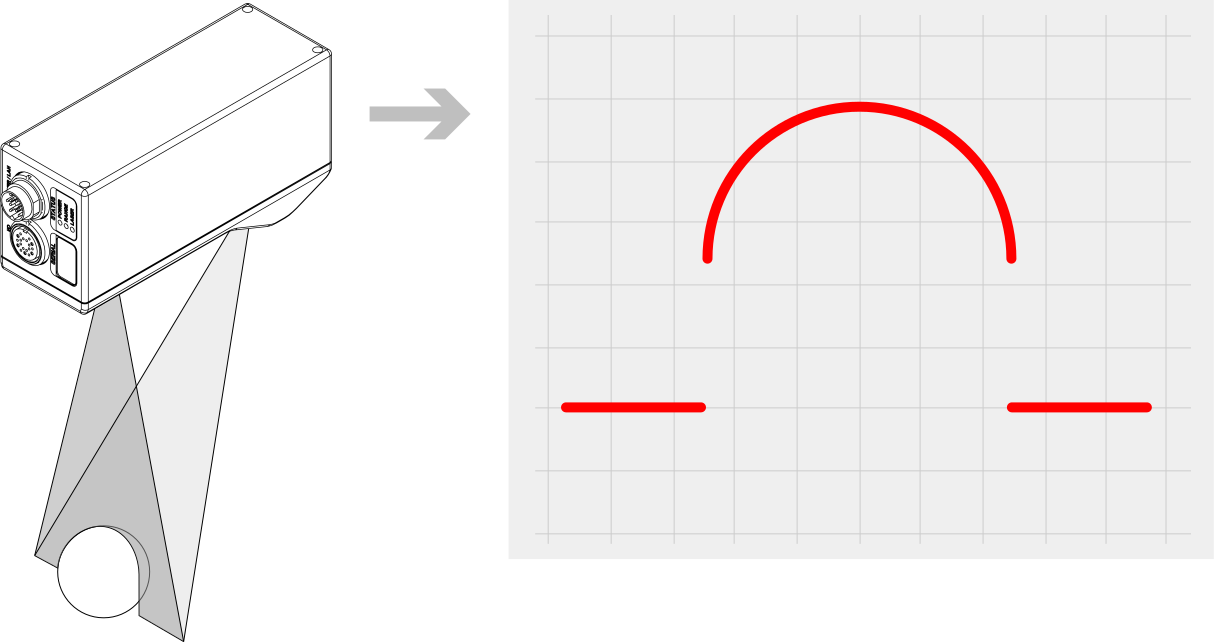
Target objects typically move on a conveyor belt or other transportation mechanism under a sensor mounted in a fixed position. Sensors can also be mounted on robot arms and moved over the target. In both cases, the sensor captures a series of 3D profiles, building up a full scan of the target. Sensor speed and required exposure time to measure the target are typically critical factors in applications with line profile sensors.

Gocator sensors are always pre-calibrated to deliver 3D data in engineering units (mm) throughout their measurement range.